Modality · Denver Experience
Vibroacoustic Therapy: A Denver Experience
If you have been searching for a way to genuinely slow down, not just zone out for an hour but actually feel your nervous system shift, vibroacoustic therapy in Denver might be worth knowing about.
At Denver Zen Den, sessions use low-frequency sound waves delivered through surfaces you can feel, creating a full-body experience that is quiet, grounded, and surprisingly moving. This is not a massage. It is not a float tank. And it is definitely not a pill. It is something most people have never tried before, and many say it is unlike anything else they have done for rest.
What Is Vibroacoustic Therapy?
Vibroacoustic therapy is the use of low-frequency sound waves delivered through specialized surfaces, like a mat, table, or chair, so that your body physically feels the vibration rather than just hearing it through the air. The frequencies are carefully chosen and run through the surface beneath you, creating a gentle, resonant sensation throughout your muscles and tissues.
This is not a sound bath where someone plays a singing bowl near your head. The vibration actually moves through your body. Guests often describe a feeling of warmth, weight, and deep physical settling. The experience is entirely non-substance based. There are no supplements, no ingestibles, and no external chemical inputs. It is purely sensory.
At Denver Zen Den, this is not framed as a clinical treatment or a medical intervention. It is a sensory-based wellness experience designed to help your body find rest. Guests are invited to notice what comes up for them rather than being told what they should feel or what outcomes to expect.
How Does Sound and Vibration Affect the Body?
Low-frequency vibration interacts with the body in ways that are genuinely interesting. Research has explored how low-frequency acoustic stimulation can influence muscle tone, heart rate variability, and the autonomic nervous system, the part of your nervous system that governs your stress and recovery responses. Studies on vibroacoustic sessions have noted measurable reductions in self-reported anxiety and physiological stress markers, suggesting real shifts in nervous system state rather than placebo effect alone.
One reason this matters is the vagus nerve. This nerve runs from your brainstem down through your chest and abdomen and plays a central role in rest, digestion, and emotional regulation. Certain frequencies and sensory conditions can support what researchers call vagal tone, essentially how well your nervous system can shift between activation and calm. If you are curious how this connects to Denver Zen Den's broader approach, the relationship between light, sound, and the vagus nerve is worth reading before your session.
None of this is meant to sound like a medical promise. The invitation at Denver Zen Den is simpler: come in, lie down, feel what happens, and see what your body does with the quiet.
What Does Vibroacoustic Therapy Feel Like?
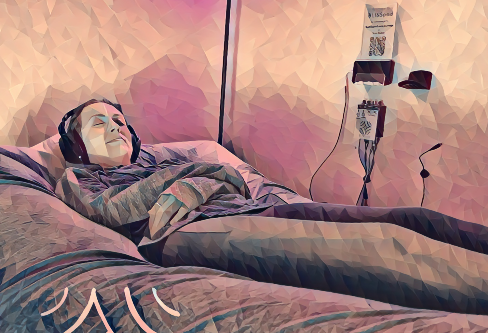
Most guests describe the first few minutes as a gentle surprise. You lie on a surface and slowly begin to feel the vibration move through you. It is not loud or jarring. It feels more like a low hum that lives in your chest and legs and lower back all at once. Many people feel heavier as their muscles release tension they did not know they were holding.
You get the spatial sound moving through the room and the physical vibration moving through your body at the same time.
The auditory layer adds depth. The sound moves around and through you rather than just sitting in the Den. Some guests feel a kind of warm stillness settle in. Others notice their breath slow down without consciously trying. Every session is paced with your comfort in mind, and the facilitator helps guide you into the experience gently rather than dropping you into the deep end without context.
Is Vibroacoustic Therapy the Same as Sound Healing?
Not exactly. Sound healing is a broad category that includes singing bowls, gongs, tuning forks, and other instruments played in a space where the sound travels through the air to your ears. Vibroacoustic therapy takes this a step further by delivering those frequencies directly through the surface you are lying or sitting on, so your body becomes part of the resonance field.
At Denver Zen Den, the approach layers both. If you want to understand the mechanics behind this, take a look at how sound works in our sessions.
What Happens During a Vibroacoustic Session?
Booking is straightforward, and the session itself is designed to feel easy from the moment you arrive. When you come in, a facilitator walks you through what to expect, answers any questions you have, and helps you get comfortable. There is no pressure to perform or produce anything. You are just there to be present.
Once the session begins, you settle onto the vibroacoustic surface, close your eyes if that feels right, and let the sound and vibration do their thing. The facilitator holds space throughout, meaning someone is always present and aware of how you are doing. At the end, you are brought out of the experience gradually, given time to return to everyday awareness, and welcomed to share anything that came up if you want to.
Sessions are available for individuals, couples, and groups. Each format is thoughtfully structured so the experience feels complete regardless of how many people are in the Den.
How Long Is a Session?
Sessions are designed to feel like a full experience, not a rushed add-on to your day. The immersive portion typically runs between 45 and 60 minutes, with additional time at the start and close for facilitation and grounding. The pacing is one of the things guests most often mention when they share their experience.
Do I Need to Prepare Anything Before My Session?
The preparation is minimal. Wear comfortable clothing that you can relax in fully. Layers are helpful since some people feel warm and others feel cool during sessions. Arrive well-hydrated and try not to eat a heavy meal in the hour before. Most importantly, come with an open and rested mindset. You do not need to have a goal, and you do not need to have done anything like this before.
If you have specific health concerns or are just curious about whether this is right for you, you can always book a discovery call before committing to a session. It is a low-pressure conversation to help you figure out if Denver Zen Den is a good fit.
Who Is Vibroacoustic Therapy For?
The honest answer is that vibroacoustic therapy in Denver is for a wide range of people. The most common guest is someone who is genuinely tired of feeling like they cannot slow down. They have tried the usual things and are looking for something that works at a deeper level. Beyond that, the studio regularly welcomes creatives who want a reset between projects, couples looking for a shared experience that goes beyond a dinner out, and individuals who are curious about sober altered states without wanting to use any substances.
You do not need to be into wellness in a big way to enjoy this. You just need to be willing to lie still for a while and see what happens. If you want a clearer sense of whether this is right for your situation, this page can help.
Can Couples or Groups Experience It Together?
Yes, and this is one of the more special offerings at Denver Zen Den. Zen for Two is a guided couples session where both people move through the experience together in the same space. Many couples describe it as one of the most present they have felt with each other in years. Group journeys are also available for those who want to share the experience with friends or colleagues.
Is Vibroacoustic Therapy Safe?
For most people, yes. The experience is gentle, non-invasive, and completely substance-free. Denver Zen Den operates with safety-aware facilitation at every session, meaning a trained facilitator is present throughout and sessions are paced in a way that respects each guest's comfort level.
If you have a pacemaker, are pregnant, or have any neurological condition that makes sensory stimulation a concern, please consult your healthcare provider before booking and reach out to Denver Zen Den directly so the team can talk through your situation.
How Does Vibroacoustic Therapy Fit Into a Broader Wellness Routine?
Vibroacoustic therapy is not meant to replace anything you are already doing. It sits alongside yoga, therapy, meditation, and breathwork as another way to support your nervous system and give your body a real opportunity to reset. At Denver Zen Den, vibroacoustic sessions can be experienced on their own or as part of a layered session that includes stroboscopic light and spatial sound. If you want to go deeper on the research behind why this works, the science behind vibroacoustic therapy walks through the evidence in plain language.
Guests who make vibroacoustic sessions a regular part of their month often describe it as the thing that helps everything else work better. Not a cure, not a treatment, just a consistent practice of giving your body genuine rest.
How Do You Book a Vibroacoustic Session in Denver?
Booking is simple. Choose your session type, pick a time that works for you, and confirm online. There are individual, couples, and group options available. If you want to share this with someone you care about, you can also gift a vibroacoustic experience directly. After your session, visit the Wall of Love page to read what other guests have shared, or add your own.
What Do People Usually Ask About Vibroacoustic Therapy?
What is vibroacoustic therapy and how does it work?
Vibroacoustic therapy uses low-frequency sound waves delivered through a specialized surface, like a mat or table, so your body physically feels the vibration. The frequencies are chosen to support nervous system rest and deep muscle relaxation. You lie on the surface, the vibration moves through you, and most people report a significant shift in how tight or tense they feel within the first 10 to 15 minutes.
Is vibroacoustic therapy a medical treatment?
No. At Denver Zen Den, vibroacoustic therapy is a sensory wellness experience, not a clinical or medical treatment. It is not psychotherapy, and it is not intended to diagnose, treat, or cure any condition.
What should I wear or bring to a vibroacoustic session at Denver Zen Den?
Wear loose, comfortable clothing you can fully relax in. Bring layers if you run cold. Arrive hydrated and try to avoid a heavy meal in the hour before your session. Everything else you need is provided at the studio.
How is Denver Zen Den's vibroacoustic therapy different from a massage or float tank?
A massage involves physical touch from a therapist working your muscles. A float tank uses sensory deprivation in a saltwater pod. Vibroacoustic therapy is different from both: you lie on a surface that delivers low-frequency vibration through your body while layered spatial sound moves through the room. There is no physical manipulation and no submersion.
Can I try vibroacoustic therapy if I have never done anything like this before?
Yes. Most guests are trying it for the first time. Sessions are guided and paced gently, and the facilitator walks you through everything before you begin. You can also book a discovery call before committing so you can ask anything on your mind first.
How many sessions do I need to notice a difference?
Many guests notice something after a single session, a feeling of calm, lighter muscles, or a quieter mind that lasts into the next day. Like most rest practices, the effects tend to build with consistency. There is no required number of sessions.
Is vibroacoustic therapy available for couples or groups in Denver?
Yes. Denver Zen Den offers a dedicated couples format called Zen for Two, as well as group journey options, both available for booking online.
Feel What Rest Actually Feels Like
Low-frequency sound, spatial audio, and a room built for one thing: giving your nervous system somewhere quiet to land.
Book a Session