Modality · Denver Experience
Stroboscopic Light Therapy: A Denver Experience
Close your eyes. Let rhythmic light do something a screen never could. Here is what stroboscopic light therapy actually is, and what a session in Denver is like.
If you have heard the words "stroboscopic light" and pictured a strobe light at a concert, this is something else entirely. At Denver Zen Den, stroboscopic light therapy is a quiet, eyes-closed experience: pulses of light calibrated to a specific rhythm, delivered while you lie back and let your eyelids do the work. It is one of the more surprising modalities in the studio, mostly because nothing about it looks like what it feels like.
What Is Stroboscopic Light Therapy?
Stroboscopic light therapy uses a light source, often a ring or panel positioned above you, that pulses at chosen frequencies while your eyes are closed. The light passes through your eyelids, which diffuse it into soft, shifting patterns rather than the sharp flash the word "strobe" implies. There is no screen, no device strapped to your face, nothing to focus on. You just receive it.
The frequencies are not arbitrary. They are selected to correspond to ranges the brain naturally moves through during rest, focus, and deep relaxation. At Denver Zen Den, this is offered as a sensory wellness experience, not a clinical treatment, and guests are invited to notice what shows up for them rather than chase a specific outcome.
How Does Light Affect the Brain?
The mechanism behind stroboscopic light is called frequency-following response. When light pulses at a steady rhythm, the brain's electrical activity tends to synchronize with it. Pulsed light in the alpha range, roughly 8 to 12 Hz, is associated with relaxed wakefulness. Slower theta frequencies, around 4 to 8 Hz, are associated with deep, meditative, or creative states. The light sets a pace, and the nervous system tends to follow it.
This is different from watching a screen or scrolling a phone, where the visual system is working to track, focus, and interpret. With closed-eye stroboscopic light, there is nothing to interpret. The visual cortex still receives the rhythm, but the effort of seeing is removed. If you want the fuller picture of how this pairs with sound and vibration, how light, sound, and vibration reach the vagus nerve goes deeper into the research.
There is nothing to focus on. You just receive it.
What Does a Session Feel Like?
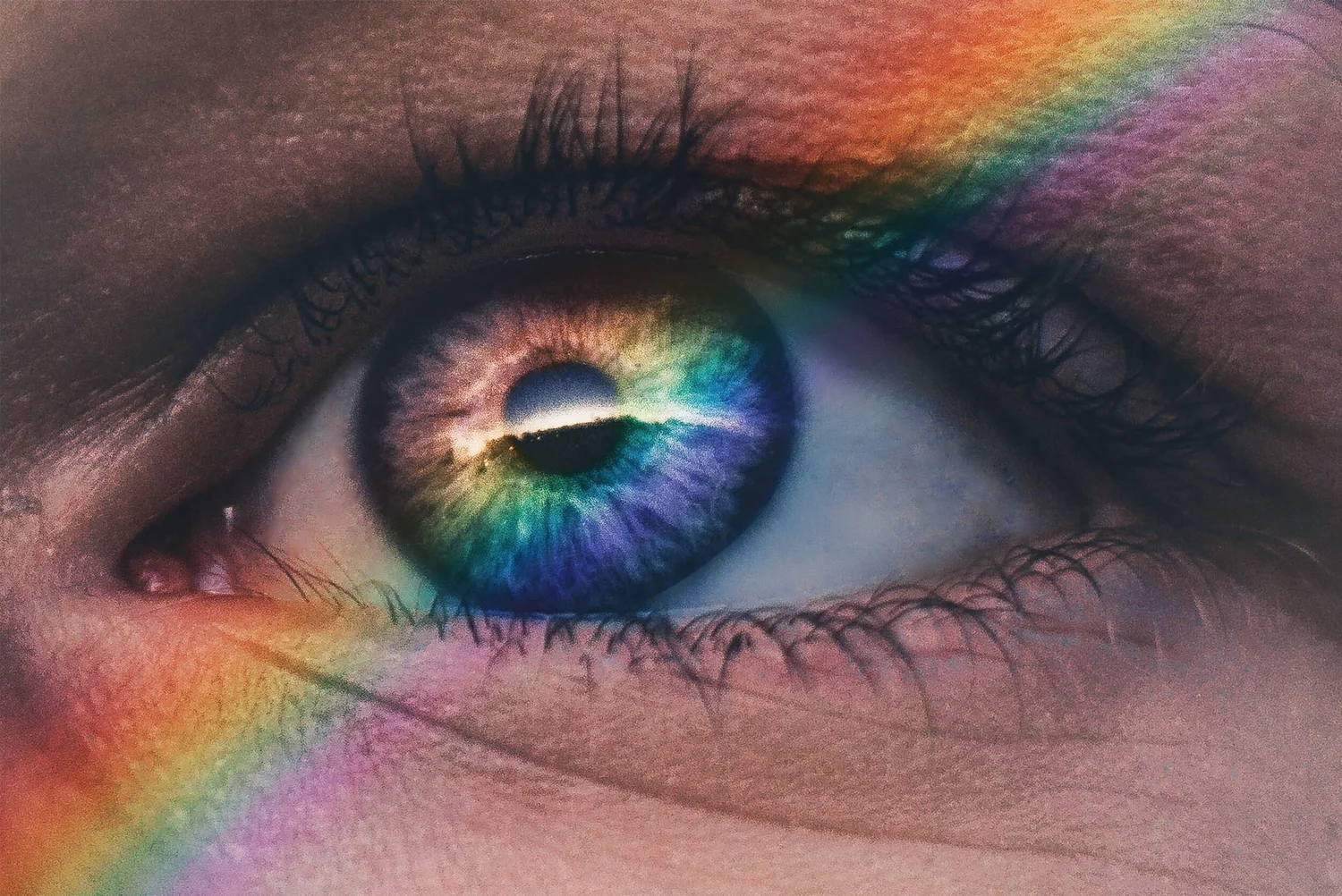
Most guests describe vivid, shifting visual patterns behind closed eyes: color, geometry, movement that seems to build and dissolve with the rhythm of the light. It is genuinely surprising the first time, since most people do not expect to "see" anything with their eyes shut. At Denver Zen Den, the light is usually layered with sound, and sometimes vibration, so the visual experience is only one part of what is happening.
Within the first several minutes, most guests notice their breathing slow and their thinking quiet down. Some people have a strongly visual experience. Others notice very little visually and instead feel a deep, physical settling. Both are common, and neither is the "right" way to experience it.
Is This the Same as Meditation or a Light Therapy Lamp?
Not quite either. A light therapy lamp, the kind used for seasonal mood support, delivers steady bright light to the open eyes over an extended period, mainly to influence circadian rhythm. Stroboscopic light is rhythmic, delivered through closed eyelids, and aimed at shifting brain state during the session itself rather than resetting a daily cycle.
It is also not meditation in the traditional sense. Meditation typically asks you to direct your own attention. Stroboscopic light does the pacing for you. That is part of why people who find it hard to meditate on their own often respond well to this modality: there is no technique to learn and nothing to get right.
What Happens During a Stroboscopic Light Session?
A facilitator walks you through what to expect before the session starts and checks in on your comfort with light intensity and pacing. You settle into a reclined position, close your eyes, and the light begins gently, building gradually rather than starting at full intensity. Sound is typically layered in alongside it.
The facilitator holds space throughout the session, adjusting pacing if needed. At the end, the light and sound taper off gradually, and you are given time to reorient before returning to the day.
How Long Is a Session?
The immersive portion typically runs 30 to 60 minutes depending on which experience you choose, with additional time at the start and close for facilitation and grounding.
Do I Need to Prepare Anything Before My Session?
Very little. Wear comfortable clothing, arrive hydrated, and avoid a heavy meal in the hour before. You do not need any experience with meditation, breathwork, or light-based practices. If you are curious but unsure whether this is the right starting point, a discovery call is a low-pressure way to ask questions first.
Who Is Stroboscopic Light Therapy For?
People come to this modality from a lot of different directions: some are chasing a specific state (focus, calm, a sense of inward quiet), others are simply curious what closed-eye light actually feels like. It tends to resonate with people who find seated meditation frustrating, since there is no technique required, just the willingness to lie back and let the rhythm do its work.
If you want a clearer sense of whether this is right for your situation, this page can help.
Can Couples or Groups Experience It Together?
Zen for Two pairs light, sound, and vibration in a shared session for couples, and group journeys are available for those who want to experience it alongside friends or colleagues.
How Does Stroboscopic Light Fit Into a Broader Wellness Routine?
Stroboscopic light is not a replacement for anything you already do. It sits alongside meditation, therapy, and breathwork as another way to give your nervous system a real chance to shift state. At Denver Zen Den, it is most often experienced layered with sound and vibroacoustic vibration rather than on its own, since the combined sensory input tends to produce a deeper effect than any single modality.
How Do You Book a Stroboscopic Light Session in Denver?
Choose your session type, pick a time, and confirm online. Individual, couples, and group options are all available. You can also gift a session to someone who could use a reset, and after your own session, the Wall of Love page is a good place to read what other guests experienced.
What Do People Usually Ask About Stroboscopic Light Therapy?
What is stroboscopic light therapy and how does it work?
Stroboscopic light therapy delivers rhythmic pulses of light, usually through closed eyelids, at frequencies chosen to guide the brain toward relaxed or meditative states. The brain's electrical activity tends to follow a repeating light rhythm, an effect called frequency-following response, which is why the pacing of the pulses matters more than the brightness.
Is stroboscopic light therapy safe for my eyes?
For most people, yes. The light passes through closed eyelids, which protect the retina. Denver Zen Den does not recommend stroboscopic light for people with photosensitive epilepsy, a history of seizures, recent eye surgery, light-triggered migraines, or active psychosis. If you are unsure, contact the studio before booking.
Is stroboscopic light therapy a medical treatment?
No. At Denver Zen Den, stroboscopic light is a sensory wellness experience, not a clinical or medical treatment. It is not intended to diagnose, treat, or cure any condition.
What does a stroboscopic light session feel like?
Most guests describe vivid, shifting visual patterns behind closed eyes, color and geometry that move with the rhythm of the light. It is usually paired with sound and sometimes vibration, and most people settle into a quieter, more inward state within the first several minutes.
Can I try stroboscopic light if I have never done anything like this before?
Yes. Sessions are guided and paced gently, and a facilitator walks you through everything before you begin. You can also book a discovery call first if you want to ask questions before committing.
Is stroboscopic light therapy available for couples or groups in Denver?
Yes. Denver Zen Den offers a dedicated couples format called Zen for Two, as well as group journey options, both available for booking online.
See What Closed Eye Light Feels Like
Rhythmic light, layered sound, and a quiet room built for one thing: giving your nervous system somewhere to land.
Book a Session